
Best Ways to Embed Client Booking Forms on Website
 Solt Wagner
Turn Visitors Into Booked Clients (Without Leaving Your Site)
If you’ve ever watched someone hit your pricing page, hover over your “Book a demo” button… and then vanish, you already know the painful truth: every extra step in the scheduling process leaks leads.
For a SaaS brand like frameblox.com—where people are evaluating your Framer UI kit, design system, and component library—the fastest win is often simple: let visitors book time with you right there on the page they’re already reading. That’s why so many teams search for the best solution to embed client booking forms on my website instead of sending people off to another tab and hoping they return.
What “embedded booking” actually means
“Embedded booking” is just a fancy way of saying: your scheduling experience lives inside your website, so the visitor doesn’t have to bounce to a separate scheduling site. In practice, you’ll usually choose one of these patterns:
- Inline widget (embedded calendar/page): The scheduler appears directly in your page layout (great for demo pages and high-intent landing pages).
- Pop-up embed: A button opens the scheduler in an overlay. This keeps your layout clean, but still keeps users on-site.
- Simple link: Not technically “embedded,” but still a common option when you want the lightest implementation.
- Form-first qualification: A short form that screens the visitor before showing booking options (useful when you only want certain users booking time).
What to decide upfront: booking flow vs. form-first qualification
Before you pick the best solution to embed client booking forms on my website, decide what you’re optimizing for:
- Speed to booking: Ideal when Frameblox visitors are ready now—think “Talk to sales” or “Get help picking a plan.”
- Quality of booking: Better when you want to qualify (team size, use case, timeline) before someone can access your calendar.
This matters because “instant booking” and “qualification-first” create very different experiences—even if both are technically an embedded booking flow.
Quick map of the solutions covered
To keep this practical, this post sticks to the verified tools and resources you provided. We’ll look at:
- Calendly embeds (including embed options, inline scheduling guidance, meetings and availability embeds, plus routing forms/routing)
- Jotform scheduling (form-first appointment scheduling with an appointment field you can embed)
By the end, you’ll have a clear sense of the best solution to embed client booking forms on my website for a SaaS like Frameblox—and how to choose based on the page you’re embedding on (home, components pages, demo pages, etc.).
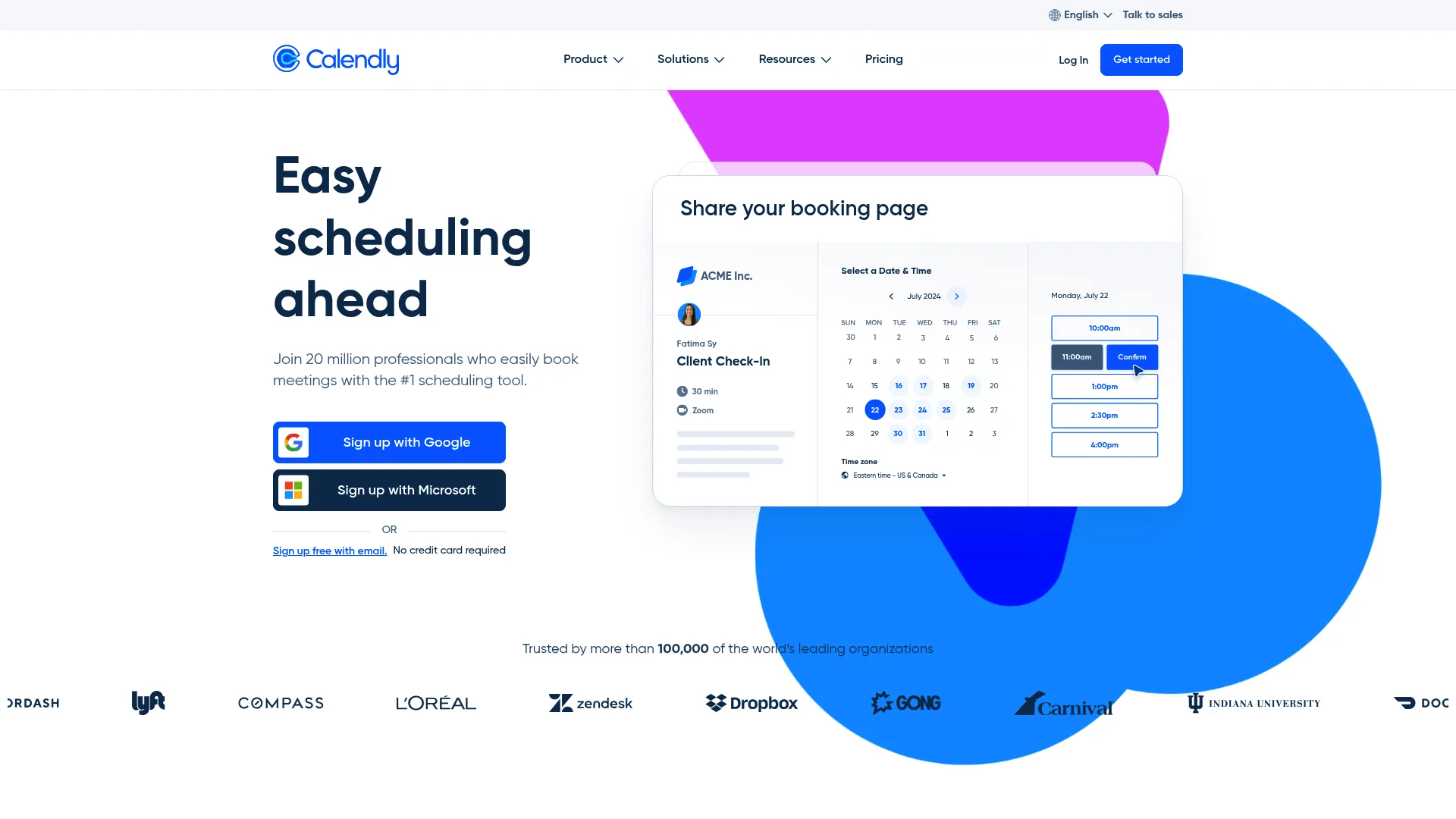
Calendly: Free Online Appointment Scheduling Software
When people ask me for the best solution to embed client booking forms on my website, Calendly is usually the first stop—mainly because it’s straightforward and widely used for website appointment scheduling.
What it is: Calendly: Free Online Appointment Scheduling Software (by Calendly) is a scheduling layer you can connect to your availability and then embed into your site so visitors can pick a time.
Features and use cases
- Scheduling + embeds: You can embed booking links/forms on your website so visitors can schedule without the back-and-forth.
- Good fit for demo calls: For Frameblox, this can work nicely on pages where users are already warmed up—like a pricing or “book a walkthrough” section.
Pros/cons (real-world)
What I really like about it: It gets you to a working embedded scheduler quickly, and the “Free” pricing note in your research list makes it an easy starting point if you’re testing.
One thing to watch out for: You’re committing to Calendly as the scheduling layer. If your intake process is heavily form-driven, you may prefer a form-first flow (we’ll talk about Jotform later).
Who it’s for
Individuals and teams who want a simple, reliable scheduling flow and consider Calendly the best solution to embed client booking forms on my website when the goal is to convert a visitor into a booked meeting with minimal friction.
Embedded Scheduling Page (Calendly Embed Options Picker)
If you’re trying to embed booking fast, the best thing Calendly did here is make the “pick an embed style and copy code” process dead simple.
Embedded Scheduling Page (by Calendly) is basically an embed options picker that helps you choose a format and generate the code you’ll place on your site.
Features and use cases
- Choose an embed style: You select how you want the scheduling page to appear (inline vs. other embed formats supported by Calendly).
- Copy/paste embed code: Great when you want to move quickly from “idea” to “live on the page.”
Pros/cons
Pros: Simple, fast, and it keeps you out of the weeds. For most teams, this is the fastest path to the best solution to embed client booking forms on my website—because you can implement without overthinking.
Cons: It’s centered on embedding a Calendly scheduling page. If you want a form-first intake (or a very customized multi-step flow), you’ll need to pair it with the right strategy (like routing forms or a form tool).
Who it’s for
Anyone who wants a copy/paste embed workflow—especially busy SaaS teams who just want the scheduling experience live on the page.
How to Add Scheduling to Your Website (Calendly Guide)
If you like having a “do this, then this” tutorial, Calendly’s own guide is a solid reference—especially if your goal is an inline embed that feels like part of your page instead of a bolt-on.
How to add scheduling to your website with ... (by Calendly) is a walkthrough that focuses on embedding scheduling into your site—specifically calling out the inline embed pattern for a website booking calendar.
Features and use cases
- Inline embed walkthrough: Helpful if you’re placing scheduling directly into a “Book a demo” section on a Frameblox landing page.
- Implementation guidance: This is the kind of doc you keep open in another tab while you ship the page.
Pros/cons
Pros: Clear implementation guidance that helps you avoid the classic embed mistakes (like embedding a widget but not giving it enough space, or burying it too far down the page).
Cons: You still need to choose which embed approach matches your UX best. The guide helps you implement—your job is to decide the right pattern.
Who it’s for
DIY site owners and small teams who want clear steps for inline booking and are searching for the best solution to embed client booking forms on my website without hiring a developer for the first iteration.
Embed Options Overview (Calendly Help Center)
When you’re comparing different Calendly embed styles and you want the “menu” of options in one place, the Help Center overview is the fastest way to orient yourself.
Embed options overview – Help Center (by Calendly) is exactly what it sounds like: an overview of no-code embed options for onsite booking.
Features and use cases
- No-code embed options: Good for marketing teams that want to ship quickly without waiting on engineering.
- Compare embed styles: Useful when you’re deciding whether your Frameblox “Book a demo” experience should be inline, a pop-up, or another embed format supported by Calendly.
Pros/cons
Pros: Very friendly for non-technical users. If your key goal is finding the best solution to embed client booking forms on my website without custom development, this is a practical reference.
Cons: Because it’s an overview, it may feel higher-level than a step-by-step tutorial. I usually pair it with a hands-on guide (like the Calendly blog embed walkthrough) when implementing.
Who it’s for
Non-technical users comparing embed choices and trying to decide what will feel most natural inside their site.
Embed Calendly Scheduling Integration
This one is worth paying attention to if you’re thinking in terms of conversion flow—not just “put a calendar here.” For SaaS, that mindset shift matters.
Embed Calendly Scheduling Integration (by Calendly) focuses on embedding a Calendly flow designed to convert website visitors.
Features and use cases
- Visitor-to-booking focus: Instead of treating scheduling like an admin tool, it frames the embed as part of a conversion funnel.
- Works well on high-intent pages: For Frameblox, think pages like “Components” listings where users are already evaluating whether your kit saves them time (and a quick call could push them over the line). You could even place a scheduling block near relevant pages like Components.
Pros/cons
Pros: Conversion-focused positioning is helpful. It nudges you to embed scheduling where it makes sense rather than everywhere.
Cons: You still have to align the embed with the page intent. If you embed a scheduler too early (before visitors understand Frameblox), you may get fewer bookings—or lower-quality ones.
Who it’s for
Service businesses and SaaS teams optimizing conversion from website visitors to booked calls—especially if you’re hunting for the best solution to embed client booking forms on my website with a funnel mindset.
Screen and Qualify People Before They Book (Calendly Routing Forms)

Not every visitor should get instant access to your calendar. If you’ve ever had your week eaten alive by “quick calls” that weren’t a fit, you’ll appreciate this approach.
Screen and qualify people before they book with you (by Calendly) explains how routing forms can screen and qualify people before scheduling—and importantly for this post, how you can embed that idea into your flow.
Features and use cases
- Qualification before scheduling: Visitors answer a few questions first; then they’re directed to the right booking option.
- Cleaner sales calendar: For Frameblox, this could mean filtering out people who want support you don’t offer—or routing agencies vs. internal teams differently.
Pros/cons
Pros: Better fit, better efficiency. If you’re searching for the best solution to embed client booking forms on my website because you want better bookings (not just more), routing forms are a strong option.
Cons: It adds a step. Some visitors will drop if your questions feel unnecessary. The trick is keeping it short and only asking what you’ll actually use.
Who it’s for
Teams that need qualification before calendar access—sales-led SaaS, agencies, or any team with multiple meeting types and limited bandwidth.
Online Meeting Scheduling Tool (Calendly Meetings)

This is one of those pages that sounds generic, but it’s useful because it frames two practical ways to offer meeting booking: a full embedded booking page or lightweight clickable times.
Online Meeting Scheduling Tool (by Calendly) describes meeting scheduling with options to embed a booking page or insert clickable times.
Features and use cases
- Embed a booking page: Ideal when you want a dedicated “Schedule a call” section inside a page.
- Insert clickable times: Useful when you want a lighter-touch option—think a short “Pick a time” list inside a campaign page.
Pros/cons
Pros: Flexible presentation. If you’re weighing the best solution to embed client booking forms on my website, it helps to know you’re not locked into one UX.
Cons: Flexibility means decision-making. You have to match the option to your page context. For example: clickable times might work on a short promo page, while an embedded booking page is better on a dedicated “Book a demo” page.
Who it’s for
Anyone scheduling online meetings who wants embedded options—or a lightweight alternative that still reduces friction.
Availability (Calendly Availability Embeds)
If your main goal is “stop making people email us for times,” availability embeds are the direct path. This is the scheduling equivalent of removing the checkout line.
Availability (by Calendly) is positioned around embedding availability so visitors can book instantly.
Features and use cases
- Show availability on-site: Visitors don’t have to wonder if you’re free next Tuesday—they can see it and book.
- Great for high-intent visitors: If someone is exploring your library of sections and pages and thinking, “I want to move fast,” the fastest sales-assist is letting them book immediately.
Pros/cons
Pros: Fast path to scheduling. For many businesses, this ends up being the best solution to embed client booking forms on my website because it removes uncertainty and hesitation.
Cons: It only works if your availability is accurate. If you don’t maintain your scheduling settings, you risk offering times you can’t keep—or blocking times you actually wanted available.
Who it’s for
Businesses where instant booking is the primary goal, and where a clean “see times, book now” experience is the priority.
Calendly Routing (Scheduling Routing)
Routing is what you reach for when “one calendar link” stops being enough. As soon as you have multiple meeting types, multiple reps, or multiple customer segments, routing starts to feel less like a nice-to-have and more like basic infrastructure.
Calendly Routing (by Calendly) is focused on embedding a routing form to direct bookings.
Features and use cases
- Routing form + direction: Visitors answer prompts and get routed to the right booking path.
- Cleaner matching: For Frameblox, this could help separate “product demo” from “partnership talk” or “enterprise questions” (depending on how you structure your meetings internally).
Pros/cons
Pros: Better distribution and matching. If you’re trying to find the best solution to embed client booking forms on my website for a team (not just one person), routing is usually part of the answer.
Cons: Adds routing logic to your flow. That’s not necessarily hard—but it does mean you should think through your categories and questions carefully so you don’t confuse visitors.
Who it’s for
Multi-service or multi-rep teams that need smarter booking paths instead of one generic scheduling link.
Jotform: Appointment Scheduling Software for 2026
If Calendly is “scheduling-first,” Jotform can be a really nice fit when your workflow is “form-first.” In other words: if you want the visitor to fill out an intake form and choose an appointment time within that same experience, Jotform’s angle may feel more natural.
Appointment Scheduling Software for 2026 (by Jotform) describes appointment scheduling software where you can embed an appointment field into website forms.
Features and use cases
- Appointment field inside a form: Instead of sending users to a separate scheduling page, you can keep scheduling as a field within your form flow.
- Better when you need structured intake: For Frameblox, think: “Request a guided setup,” “Ask about licensing,” or “Submit project details and pick a time.” If your first step is collecting context, this can support that pattern.
Pros/cons
Pros: Form-centric scheduling is great when qualification and data collection aren’t optional. For some teams, this becomes the best solution to embed client booking forms on my website because it ensures every booking arrives with the info you need.
Cons: If your visitors are already high-intent and you just want instant booking, a form-first flow can feel slower than a direct scheduler embed.
Who it’s for
Teams that prefer form-based intake and want embedded appointment selection as part of the same form experience—especially when the first conversation depends on upfront details.
How to Choose Your Best Embed Approach (Quick Fit Guide)
Here’s the part that actually saves time: picking an embed approach based on your page goal. Because the best solution to embed client booking forms on my website isn’t “the most popular tool”—it’s the one that matches what your visitor is trying to do on that specific page.
Scheduling page embed vs. inline calendar embed (Calendly embed options)
- Use a scheduling page embed when you want a clean, dedicated scheduling experience that’s easy to drop into a page section. The fastest starting point here is the Embedded Scheduling Page, since it’s built around choosing an embed style and copying code.
- Use an inline embed approach when you want the booking calendar to feel like part of the content flow (especially on a long-form landing page). Calendly’s guide How to add scheduling to your website with ... is the most relevant research item you shared for learning that inline pattern.
If you’re building in Framer and polishing conversion-focused sections (which Frameblox customers obviously care about), inline embedding often feels more “native.” But the scheduling page embed is frequently quicker to implement and test.
Qualification first (routing forms/routing) vs. instant booking (availability)
- Choose qualification first if your calendar time is precious, or if you have multiple paths (sales, partnerships, support). Calendly’s thinking on this shows up clearly in Screen and qualify people before they book with you and the productized approach in Calendly Routing.
- Choose instant booking if your priority is speed and reducing hesitation. That’s where Availability fits: you embed availability and let people book immediately.
For Frameblox specifically, a nice compromise is: instant booking for “product demo” on high-intent pages, but routing/qualification for edge cases (like enterprise licensing or complex migrations) where you need context first.
When a form-first flow makes sense (Jotform appointment field in website forms)
If the first call will be more productive when you already know the visitor’s:
- role and company type,
- what they’re building in Framer,
- timeline,
- what they’re stuck on,
…then a form-first flow can be the best solution to embed client booking forms on my website. That’s where Appointment Scheduling Software for 2026 (Jotform) stands out in your research list: it’s built around embedding appointment scheduling inside forms, not bolting a form onto a scheduling page later.
Your Next Steps: Pick, Embed, and Start Getting Booked
If you want this to pay off quickly (and not become a “we’ll get to it later” project), keep it simple: pick one path, embed it, validate the experience, then iterate.
Choose one embed path
- Booking page embed: Quick to implement using the Embedded Scheduling Page.
- Inline embed: Great when you want the calendar to feel native; reference How to add scheduling to your website with ....
- Instant booking via availability: Use Availability if speed is your #1 goal.
- Qualification/routing: If you need to screen first, start with Screen and qualify people before they book with you or implement via Calendly Routing.
- Form-first scheduling: If intake data is essential, consider Appointment Scheduling Software for 2026.
Implement with the copy/paste embed workflow—and validate on-page behavior
The biggest “hidden” step is testing the page like a visitor would. After you embed, check:
- Does the widget load fast and display correctly on mobile?
- Is it obvious what the visitor should do next?
- Does the embed sit near the point of maximum intent (not buried below a huge footer)?
If you’re adding this to your marketing site, it’s also worth placing the embed on the pages that already pull high intent. For example, you might reference Frameblox’s library in context—like linking visitors from your product narrative to your component catalog (All) and then offering a “book help choosing sections” scheduler where people naturally start comparing options.
Sanity-check the visitor experience
The practical rule I use: the best solution to embed client booking forms on my website is the one that creates the fewest steps while still protecting your time. So do a quick sanity check:
- Fewer steps: If you don’t need qualification, don’t add it.
- Clear qualification: If you do need qualification, ask only what you’ll act on.
- Faster booking: If the goal is a booked demo, don’t make visitors hunt for the calendar.
If you want a clean, modern place to embed any of these flows, this is also where having a strong design system helps. Frameblox is literally built for that—consistent sections, buttons, spacing, and layout rhythm—so your scheduling embed doesn’t look like a random widget glued onto an otherwise polished page. If you haven’t browsed the component library in a while, the Components section is a good reminder of how quickly you can spin up conversion-ready layouts.
When you’re ready, pick one approach and ship it this week. Testing a real embed with real traffic is the fastest way to discover your personal best solution to embed client booking forms on my website—because your visitors will tell you (with bookings) what they prefer.
This article was created using Blogie.