
Best Ways to Embed a Booking Calendar (2025–26)
 Solt Wagner
Make website bookings effortless in 2025–2026
If you run a modern SaaS site like frameblox.com, you already know the “conversion moment” often happens when someone is excited and ready to act. For Frameblox, that might be a customer wanting a demo, a support call, a partnership chat, or even a quick onboarding session before they commit. The faster you can get someone from “interested” to “booked,” the fewer leads you lose to tab-switching, back-and-forth emails, or decision fatigue.
That’s why people keep searching for the best ways to embed booking calendar appointment form on website 2025 2026. Not because calendars are exciting—but because embedded booking removes friction. It turns “contact us” into “pick a time,” which is a very different vibe.
What “embedding” a booking calendar can look like
When people say “embed,” they usually mean one of these practical formats:
- Inline embed: the scheduler lives directly on your page (great for high-intent pages).
- Pop-up / overlay: a button triggers a scheduling window without leaving the page.
- Widget-style embed: a compact block that fits neatly into a section layout.
- iFrame embed: a self-contained booking page displayed inside your site layout (common in website builders).
What to prep before you add code
Before you choose the best ways to embed booking calendar appointment form on website 2025 2026, do a quick checklist:
- Placement: Where is intent highest—pricing, “contact,” “request a demo,” or a specific product page?
- Mobile experience: Make sure it’s easy to scroll, tap, and complete on a phone.
- Design fit: If you’re using a design system (Frameblox literally is one), pick an embed style that won’t fight your layout or typography.
How this list is organized
I’m only covering the verified tools and official pages provided in your research. That means you’ll see:
- Official Calendly embed pages and docs (so you can choose the exact method confidently)
- Other booking tools and widget options that support embedded flows (including iFrame-style widgets)
Along the way, I’ll keep everything framed around a SaaS site like Frameblox—where the goal isn’t just “a calendar,” it’s a clean booking flow that looks native inside your UI.
Calendly: Free Online Appointment Scheduling Software
If you’ve ever tried to find the best ways to embed booking calendar appointment form on website 2025 2026, you’ve probably seen Calendly recommended a hundred times—and it’s not random. Calendly: Free Online Appointment Scheduling Software (Creator: Calendly) is basically the default choice for simple scheduling links you can place on website pages.
Features (and what matters for a SaaS site)
What I really like about Calendly is how quickly you can go from “we should offer demo bookings” to having a live scheduling link on your site. The core feature is straightforward: you create an availability-based scheduling page and share it. For Frameblox-style workflows, that could be:
- “Book a demo of the UI kit and design system”
- “Talk to us about enterprise licensing”
- “Onboarding call for teams adopting our component library”
Use case: embed booking links on website pages
Calendly’s research item specifically highlights embedding booking links on website pages. This is often the fastest “ship it today” move—especially if you’re iterating and don’t want to rebuild pages.
Pros / cons
- Pro: Price is listed as Free in the research data, so it’s low-risk to test.
- Con: The “embed specifics” depend on the chosen method (inline, pop-up, etc.). You’ll likely end up using Calendly’s official embed docs (which we’ll cover next).
Who it’s for
Individuals and teams who want a simple, free scheduler—especially if you just need the booking flow to work reliably while your site (or your marketing pages) keep evolving.
Embedded Scheduling Page (Calendly)
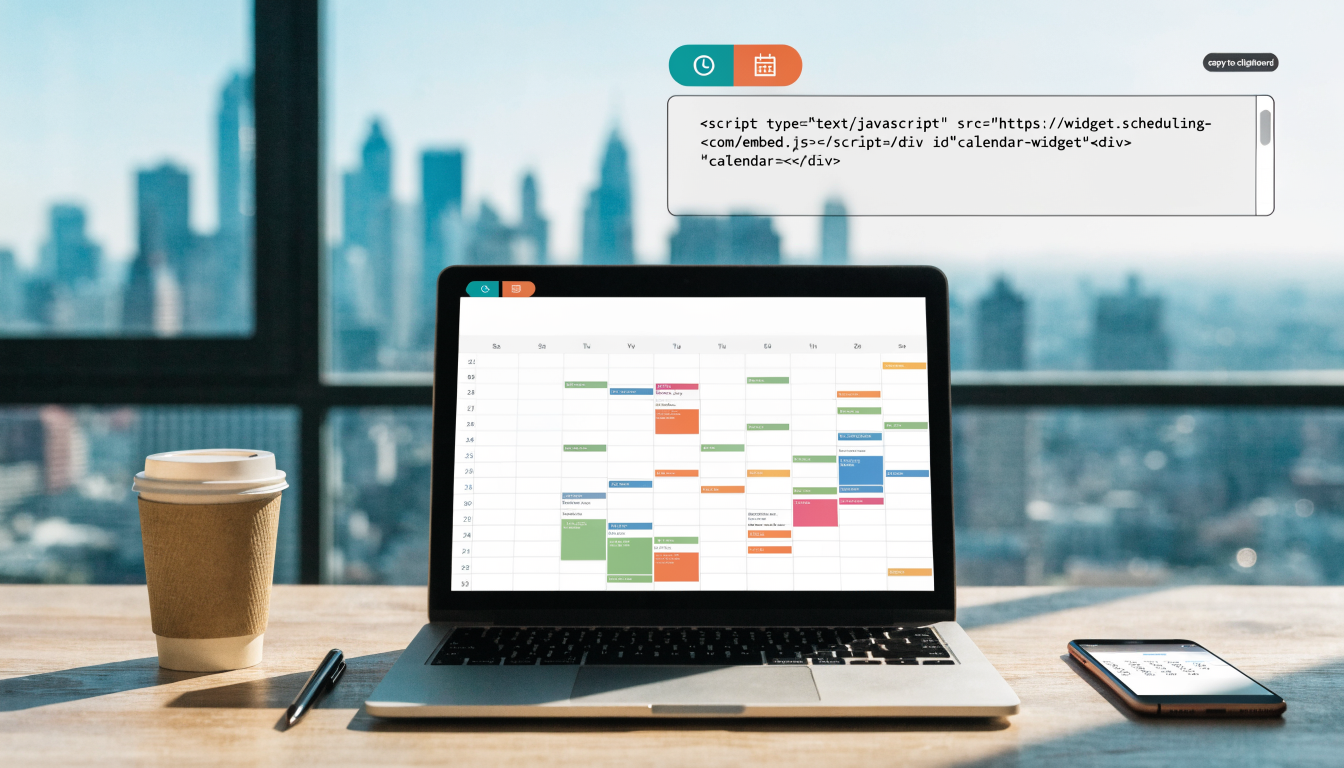
If your goal is speed—and you want the most direct “official” path—this is one of the best ways to embed booking calendar appointment form on website 2025 2026 without overthinking it. Embedded Scheduling Page (Creator: Calendly) is where Calendly explicitly helps you choose an embed type and then copy the code you need.
Features: embed type selection + copy/paste workflow
This page is all about reducing decision friction. Instead of hunting around, you pick the embed style you want and get the snippet. For a design-system-driven site like Frameblox, this is useful because you can choose an embed approach that best matches your page layout:
- If you have a dedicated “Book a demo” page, an inline embed can feel clean and intentional.
- If you’re embedding inside a section on a longer landing page, you may prefer an approach that doesn’t dominate the scroll.
Use case: choose embed type and copy code for your site
This is the “I just want the code” option. If you’re working in a tool like Framer (and Frameblox customers often are), you’ll typically paste embed code into an embed/code component and then style the surrounding section using your component system. If you need inspiration for layout structure, browsing Frameblox Components can help you slot the embed into a section that already feels native.
Pros / cons
- Pro: Free and straightforward—very little reading required.
- Con: You still need to add code to your site (and then test responsiveness carefully).
Who it’s for
Anyone who wants the fastest official Calendly embed path and doesn’t want to wade through documentation unless something breaks.
How to add scheduling to your website with ... (Calendly blog)
When you’re not just embedding for yourself—but for a brand you care about—having a walkthrough can save time. How to add scheduling to your website with ... (Creator: Calendly) is a blog post that focuses on step-by-step guidance for embedding a scheduling page.
Features: step-by-step guidance for embedding
This kind of content helps because “embed” isn’t one thing. On a SaaS marketing site, you might embed scheduling in a few different places:
- A dedicated demo page
- A contact page (as an alternative to a form)
- A pricing page section for high-intent visitors
A walkthrough helps you understand where each approach fits, which is exactly what people mean when they search for the best ways to embed booking calendar appointment form on website 2025 2026.
Use case: follow a practical embed scheduling page guide
If you’re building in a structured way (very Frameblox), this guide pairs nicely with a component-driven approach: build a “Booking Section” once, then reuse it across pages. If you want a jump start on layout patterns, you can also browse Frameblox’s full library at All and pick a section layout that already supports a two-column “copy + embed” area.
Pros / cons
- Pro: Free instructions, less guesswork.
- Con: Implementation still varies by platform. A Framer site won’t embed the same way as a hand-coded site, even if the snippet is similar.
Who it’s for
DIY site owners and marketers who prefer a walkthrough before embedding—especially useful if you’re delegating tasks and want a shared reference.
How to add Calendly to your website - Help Center
When I want fewer opinions and more “this is the official method,” I go straight to docs. How to add Calendly to your website - Help Center (Creator: Calendly) is exactly that: official help documentation for adding Calendly to a website.
Features: official help documentation
Docs matter when you’re embedding on a production SaaS site because you’re not just trying to make it work once—you want it to keep working after updates, redesigns, or new pages. If Frameblox is your design system backbone, you’ll probably iterate on site sections frequently; having the official reference reduces the “what did we paste where?” problem.
Use case: reference the help article when embedding Calendly
This is the page you keep bookmarked for when you need to:
- Confirm you’re using the correct embed method for your layout
- Troubleshoot if the embed doesn’t render correctly
- Re-check requirements if you’re changing where the scheduler lives
It’s also helpful if your team has a “no random scripts without docs” rule (which is a healthy rule, by the way).
Pros / cons
- Pro: Free, authoritative, written for support clarity.
- Con: Help center writing can feel more technical than a blog post—so it’s best when you’re implementing, not brainstorming.
Who it’s for
Users who want official support documentation to follow—especially teams that care about repeatable setup and fewer surprises.
Embed options overview - Help Center - Calendly
If you’re still deciding which embed style fits your page best, this is one of the best ways to embed booking calendar appointment form on website 2025 2026 because it clarifies the menu of choices. Embed options overview - Help Center - Calendly (Creator: Calendly) is an overview of Calendly embed methods, written to help you compare approaches.
Features: overview of embed methods
What I like about an “overview” page is that it helps you avoid the common trap: picking an embed type because it’s easiest, not because it’s best for the user journey. On a site like Frameblox, your visitors may be:
- Evaluating quickly (“Is this kit legit?”)
- Comparing alternatives (“Does it work with my workflow?”)
- Looking for trust signals (“Can I talk to someone?”)
Different intent levels call for different embed friction. A pop-up triggered by a “Book a demo” button can keep the page clean. An inline embed can increase completion for high-intent visitors who are already convinced.
Use case: compare embed approaches before implementing
This is the “choose your pattern” page. If you have a design system mindset, treat it like selecting a component variant: inline vs overlay vs link-style. Once you pick one, you can build a reusable “Booking CTA” block in your component library and drop it anywhere.
Pros / cons
- Pro: Free and clarifying—helps you make a deliberate choice.
- Con: You still have to choose the right option (it won’t decide for you).
Who it’s for
Site owners deciding between multiple embed methods—especially if you care about UX consistency across a marketing site.
Embed Calendly Scheduling Integration
Sometimes you don’t want “a blog” or “a help doc,” you want the official landing page that centralizes the embed story. Embed Calendly Scheduling Integration (Creator: Calendly) is positioned as the official embed integration entry point.
Features: official embed integration landing page
This is useful when you’re implementing as part of a broader site build. For example, if you’re refreshing the Frameblox marketing site (or spinning up a campaign landing page), you might be assembling:
- A hero section
- Feature blocks
- Testimonials
- A demo booking section
An “integration” landing page can help teams align on the canonical way the tool expects to be embedded.
Use case: use the official integration page to embed scheduling
If you’re documenting internal processes (“How we embed demo scheduling on all product pages”), linking to this page internally is handy. It’s also one of the best ways to embed booking calendar appointment form on website 2025 2026 if you want to start at the top and then branch into the exact embed method from there.
Pros / cons
- Pro: Free and centralized—good starting point.
- Con: It may route you to setup steps elsewhere depending on what you’re trying to do.
Who it’s for
Anyone looking for the official “embed integration” entry point—especially helpful if multiple people on your team touch the website.
Square: Free Online Booking and Scheduling Software

If Calendly is the quick “schedule a meeting” choice, Square tends to show up when you want scheduling plus operational management. Free Online Booking and Scheduling Software (Creator: Square) is positioned around business appointment booking and management, with Free pricing listed in your research.
Features: booking plus business management
Square’s appeal is that it’s designed for service businesses that live and die by appointment logistics. If your workflow includes more than just picking a time—like managing staff availability, services, and day-to-day operations—Square is built for that kind of reality.
Now, Frameblox is a SaaS product, not a salon. But the reason I’m including Square here (and why it still fits the best ways to embed booking calendar appointment form on website 2025 2026 conversation) is that some SaaS businesses run real operational calendars too: training sessions, paid consultations, onboarding packages, workshops, or implementation services that behave like “appointments.”
Use case: run bookings for a business alongside management tools
If you offer structured onboarding or paid setup help for your design system customers, a business-oriented scheduler can be a better fit than a lightweight meeting tool—because it’s built around services and operations, not just “meetings.”
Pros / cons
- Pro: Free pricing (per your research) makes it feasible to evaluate.
- Con: Setup depends on your workflow needs. If you don’t need management features, it can feel like more system than you need.
Who it’s for
Service businesses (or SaaS teams offering service-like sessions) that want booking plus management in one system—especially if you have multiple appointment types.
Elfsight: Appointment Booking widget — Embed Booking on iFrame
If your priority is “give me a widget I can drop into almost any website builder,” Elfsight is the vibe. Appointment Booking widget — Embed Booking on iFrame ... (Creator: Elfsight) is specifically about embedding an appointment booking widget via iFrame, and the price is listed as Paid.
Features: widget designed for iFrame embedding
iFrame widgets can be a practical option when you want compatibility and speed. You’re essentially placing a self-contained “mini app” onto your page. For a Frameblox-powered marketing site, that can be attractive because:
- You can keep your page layout consistent using your own sections/components
- The booking tool runs inside its own container
- You’re less dependent on custom scripting
Use case: embed a booking widget via iFrame
This is one of the best ways to embed booking calendar appointment form on website 2025 2026 if you’re working in environments where iFrames are the most reliable embed primitive. It’s also useful when you want a “widget feel” rather than a plain scheduling link.
Pros / cons
- Pro: iFrame approach can be quick to place on many site builders and landing page tools.
- Con: It’s paid (per your research). Also, iFrames can be less flexible if you want the booking UI to perfectly match your design system styling.
Who it’s for
Teams that want a hosted widget-style embed and are OK with paid plans—especially if they value “works everywhere” over deep UI customization.
Calfrenzy: Embed a booking widget on your site in seconds

If you want something that’s explicitly optimized for fast setup and mobile friendliness, Embed a booking widget on your site in seconds (Creator: Calfrenzy) is positioned as a quick, mobile-friendly booking widget. Price is listed as Free in your research, which makes it an easy one to test.
Features: mobile-friendly widget designed for fast setup
Mobile is where booking experiences often break. Buttons get tiny, embeds overflow, scrolling gets weird, and suddenly the “simple scheduling step” becomes a mini obstacle course. A mobile-friendly widget focus is a big deal if your traffic includes:
- Designers browsing UI kits from their phone
- Founders clicking from social or communities
- Busy teams opening a link from Slack on mobile
For Frameblox, even if most purchases happen on desktop, the first touch might be mobile—so your booking flow should hold up.
Use case: add a mobile-friendly booking widget quickly
This fits the “get it live fast” scenario. If you’re experimenting with different conversion points (like adding a booking option to a components page or a support page), quick setup lets you iterate without turning it into a sprint.
Pros / cons
- Pro: Free and simple to try, and the positioning emphasizes mobile friendliness.
- Con: Widget simplicity can be a tradeoff—your final result depends on how well it fits your site’s layout and how much control you have around the embed.
Who it’s for
Creators and small businesses that want a fast, mobile-first widget—especially if you’re prioritizing speed over deep customization.
Setmore: Free Booking Widget For Your Website
Setmore is another option people often consider when they want a straightforward embed and don’t want to overcomplicate things. Free Booking Widget For Your Website (Creator: Setmore) focuses on website widgets for bookings, with the specific use case of embedding a booking page as an iframe. Price is listed as Free.
Features: website widgets for bookings
Setmore’s website widget angle is practical: give your visitors a clear path to book without sending them through extra steps. If your Frameblox site has multiple audiences—freelancers, in-house design teams, agencies—you can use a booking widget to route high-intent visitors to a conversation instead of leaving them to guess which plan or licensing model they need.
Use case: embed booking page as iframe
If you’re using a site builder or a component-driven approach, iframe embeds are often the least fragile method. You create a container section, drop the iframe, and then focus on the surrounding messaging. That makes this one of the best ways to embed booking calendar appointment form on website 2025 2026 for speed and reliability.
Pros / cons
- Pro: Free, and iframe embed is usually straightforward.
- Con: iFrames can be less flexible in design. If you want your booking UI to perfectly match Frameblox styling, you may need to accept some visual difference.
Who it’s for
Businesses that want a free, iFrame-based booking embed option—especially if “good enough + works everywhere” is the goal.
How to choose the right embed approach for your site
Choosing between the best ways to embed booking calendar appointment form on website 2025 2026 comes down to two things: user intent and implementation tolerance (how much work you’re willing to do to make it feel native).
When a simple booking link is enough vs. when you need an embedded page/widget
A simple booking link is enough when the visitor already trusts you and just needs a next step. Example: an “Enterprise” page for Frameblox where visitors have already decided they want to talk.
An embedded page or widget is better when your page is designed to convert right there. For example:
- A “Request a demo” landing page built with your strongest social proof
- A “Need help picking components?” section where the embedded scheduler is the action
Embedded flows reduce drop-off because the visitor doesn’t feel like they’re “leaving” your site.
When iFrame widgets make sense for speed and compatibility
If your site is assembled from sections (very common with Framer sites and UI kit workflows), iFrame widgets can be the most predictable. Tools like:
…lean into that pattern. One thing to watch out for: iFrames can be harder to style to match your design system. So consider placing them in a “card” section where the Frameblox styling frames the widget (headline, bullets, trust signals), even if the widget UI itself is slightly different.
Picking based on budget: free options vs paid widget tooling
If you’re budget-sensitive (or just testing), start with free options in your research list:
- Calendly: Free Online Appointment Scheduling Software
- Embedded Scheduling Page
- Free Online Booking and Scheduling Software
- Embed a booking widget on your site in seconds
- Free Booking Widget For Your Website
If you want a hosted widget approach and you’re okay paying for convenience, the paid option in your research is:
In other words: there are plenty of best ways to embed booking calendar appointment form on website 2025 2026 that cost nothing to start—so you can validate demand before you optimize aesthetics.
Your next steps: publish, test, and refine your booking flow
Once you pick one of the best ways to embed booking calendar appointment form on website 2025 2026, the real win is shipping it in a way that actually gets used.
Place your booking embed where intent is highest
For a SaaS site like Frameblox, I’d prioritize:
- Service-like pages: enterprise licensing, onboarding, implementation help
- Contact pages: offer booking as a faster alternative to a form
- High-intent product pages: where visitors already understand the value
If you’re building those pages in Framer, it can help to keep your booking section as a reusable component (very on-brand for Frameblox). Even browsing the Frameblox Code area can spark ideas for clean embed wrappers and consistent spacing.
Test the booking experience on mobile and desktop before announcing it
Open the page on a phone. Actually try to book. Check scroll behavior, load speed, and whether the embed feels cramped. A lot of “embed booking calendar on website” setups look fine on desktop and then fall apart on mobile—especially with inline calendars.
Keep the setup simple: one primary booking action per page
If there’s one practical rule I’d enforce: don’t overwhelm the page with multiple competing booking actions. One page should have one main booking goal (demo, onboarding, support call, etc.). If you need multiple options, consider a short “choose what you need” step above the embed—but keep the page’s primary button consistent.
If you want a simple starting point, I’d personally begin with Calendly’s official embed flow—because it’s well-documented and quick to validate—then refine the layout so it looks native inside your Frameblox-designed sections. That’s the most reliable path I’ve seen for shipping one of the best ways to embed booking calendar appointment form on website 2025 2026 without turning it into a multi-week project.
This article was created using Blogie.