
Does Framer Have a Built-In CMS? Full Guide
 Solt Wagner
The Real Answer: What Framer’s CMS Actually Is
If you’re Googling does framer have built-in cms, you probably want a straight answer without a bunch of “it depends.” Here it is: yes, Framer has a built-in CMS, and it’s designed to feel lightweight, visual, and tightly integrated with the way Framer builds pages. It’s not a separate product you bolt on later—it’s part of the same workflow where you design, publish, and iterate.
Where the CMS lives inside Framer
Framer’s CMS lives directly inside your project, alongside your pages, layers, and components. You create and manage content without leaving the editor, which is a big reason people ask does framer have built-in cms in the first place—because it’s “right there” instead of being a separate admin panel. If you want the official overview, Framer describes it here: Advanced CMS.
What “Collections” means in practice
In Framer CMS, your content is organized into Collections—think “Posts,” “Case Studies,” “Jobs,” “Changelog entries,” or “Help articles.” Each Collection has fields (like title, slug, category, cover image, rich text) and individual entries (each blog post or case study). If you’ve used Webflow or Notion databases, the mental model will feel familiar, just more design-first.
Who Framer’s CMS is built for
Framer’s CMS is built for teams that want to ship fast and keep content clean without turning the setup into a backend project. In my experience, it’s ideal for founders, marketers, and designers running a marketing site, content hub, or product updates—especially when the priority is launch speed and good-looking templates. If you’re building in Framer already (or using a UI kit like frameblox.com), the built-in CMS is often the quickest path from “blank page” to “publishing consistently.”
So yes: does framer have built-in cms is a “yes,” but the more useful question is whether it’s the right CMS for the structure and scale you need. Let’s unpack how it actually works so you can decide with confidence.
How Framer’s Built-In CMS Works Behind the Scenes
When someone asks does framer have built-in cms, they’re usually also asking, “Is it a real CMS or just a simple blog tool?” Framer’s CMS is real in the sense that it supports structured content, dynamic pages, and repeatable design patterns. But it’s also intentionally streamlined, so it doesn’t feel like you’re building a database schema for a week before you can publish one post.
Collections, fields, and entries
A Collection is a content type (like “Blog Posts”), and it contains fields (like Title, Slug, Date, Author, Tags, Featured Image). Each row is an entry—one post, one case study, one update. This structure is why the answer to does framer have built-in cms is so useful: you can model content quickly without needing a developer to wire up a backend.
CMS pages and dynamic routing
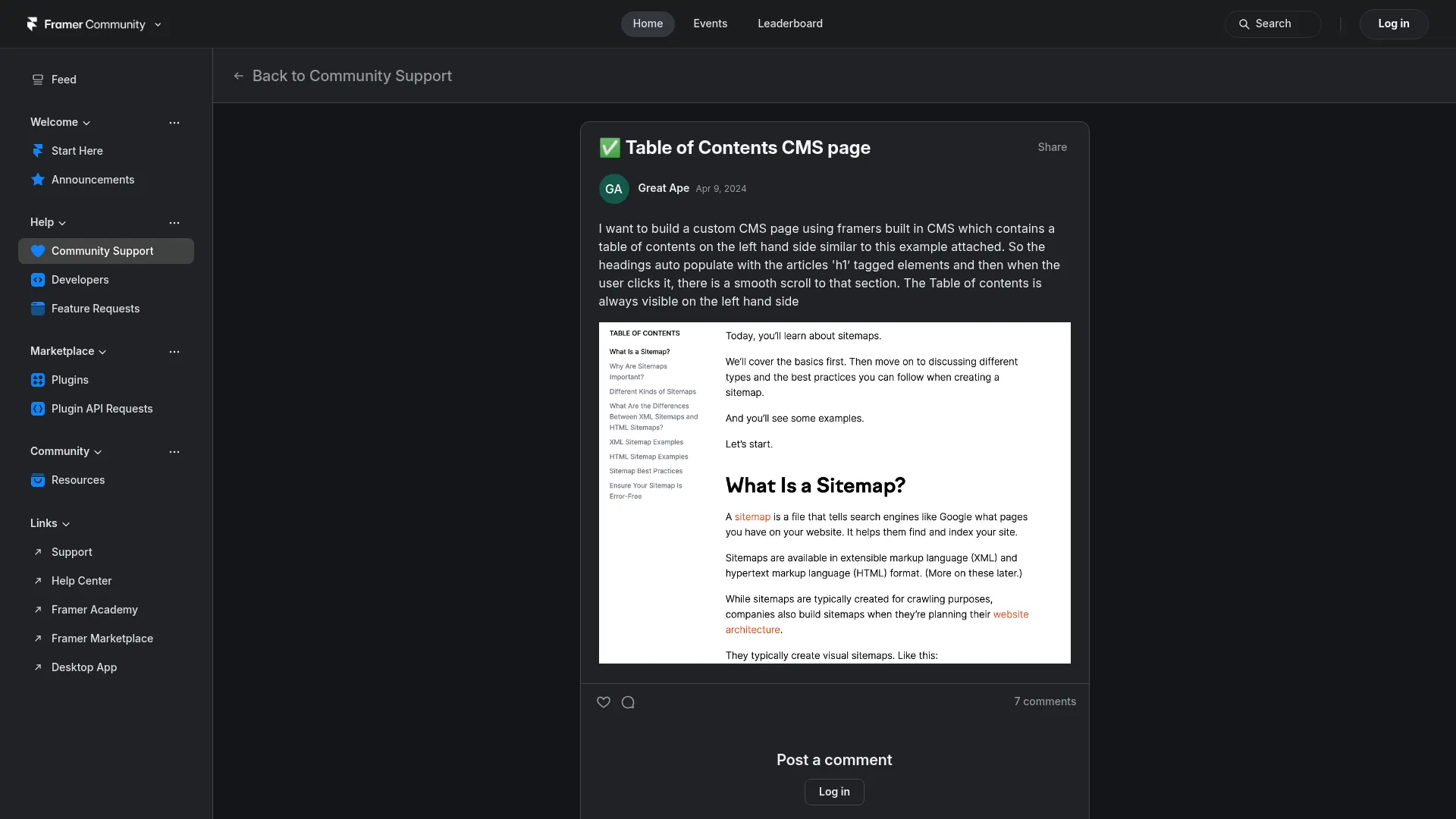
Framer supports CMS template pages that render dynamically based on the entry. Typically, you design a single “Post Template” page and bind elements to fields (title text layer to Title, image layer to Featured Image, etc.). For a helpful community reference on CMS page behavior, this thread is worth bookmarking: Table of Contents CMS -.
Filtering, sorting, and referencing content
You can filter and sort lists based on fields—newest first, featured only, category match, and so on. Referencing content (like linking a post to an author entry) is possible, but it’s not trying to be a fully relational database with deep nesting. That’s one of the key “trade-offs” hidden inside the simple question: does framer have built-in cms—yes, but it’s optimized for speed and clean design patterns more than complex relational modeling.
If your goal is to ship a polished blog, a library of case studies, or a changelog that looks custom, this behind-the-scenes model is usually plenty.
What You Can Build Fast With Framer CMS (Real Use Cases)
Here’s where Framer CMS gets genuinely fun: it’s quick to set up, and it’s tightly connected to your design system. If you’re building with a component library like Frameblox—especially browsing prebuilt layouts in Components—you can go from idea to publishable content in hours, not weeks. And yes, this is exactly why people keep asking does framer have built-in cms: they want content without complexity.
Blogs and content hubs
A Framer blog CMS setup is one of the most common use cases: posts live in a Collection, and you generate a listing page plus a post template page. You can add filters like “Featured,” “Category,” or “Newest,” and keep the design consistent with your site. This is a solid overview of capabilities and workflows: Framer CMS Features for Content Management.
Portfolio projects and case studies
Case studies are perfect for Collections because every project tends to share the same structure: overview, problem, solution, outcomes, gallery, tools used. You design one strong template and then duplicate content entries. If you’re running a SaaS like Frameblox, a “Customer Stories” or “UI Kit Use Cases” Collection can stay fresh without redesigning pages every time.
Landing pages with repeatable sections
This one surprises people: Framer CMS isn’t only for long-form posts. You can store repeatable blocks—testimonials, FAQs, feature callouts—and then pull them into landing pages as lists. When you’re launching promos (say, a seasonal offer similar to Framer Black Friday), that repeatable content approach can cut your time-to-publish dramatically.
So if you’re evaluating does framer have built-in cms, it helps to picture your content as “templates + structured entries.” If that matches your needs, you’ll move fast.
Where Framer CMS Hits Its Limits (Before You Commit)

I like Framer CMS a lot, but I also think it’s smart to spot the boundaries early—before you build your whole marketing engine around it. The question does framer have built-in cms is a starting point, but the real decision is whether the built-in approach matches your content complexity, team workflow, and scale goals.
Advanced relationships and complex schemas
Framer collections work best when your content types are fairly straightforward: posts, authors, tags, projects, pages. Once you need complex relationships—like multi-level categories, many-to-many mappings, nested content modules, or deep references across types—it can feel limiting. You can still achieve a lot with careful modeling, but it’s not trying to be a fully relational CMS.
Editorial workflows and approvals
If you need robust editorial workflows—draft states, approvals, roles, revision history, and content scheduling across teams—Framer may feel a bit light. For small teams, this can be a feature, not a bug, because it keeps publishing simple. But if your content has compliance or multi-stakeholder review, you’ll want to test the workflow before committing.
Scaling content volume and multi-site needs
Framer can handle a normal marketing site and a healthy blog, but at very high content volumes you’ll care more about bulk operations, migrations, and governance. Multi-site management and advanced localization needs can also push you toward more enterprise CMS setups. This is often where Framer CMS limitations show up most clearly: the tool is optimized for speed, not for managing a content universe across brands and regions.
If your plan is “launch fast, keep it clean,” Framer CMS usually shines. If your plan is “build a massive content machine with heavy workflows,” you’ll want to compare options before you lock in your templates.
Framer CMS vs Webflow CMS: The Trade-Offs That Matter

If you’re comparing Framer vs Webflow CMS, you’re not alone. It’s one of the most practical comparisons because both tools target modern, design-forward websites. And it ties back to the core query—does framer have built-in cms—because Webflow set a strong expectation for what “CMS + design tool” should feel like.
Content modeling and relationships
Webflow’s CMS has mature content modeling options and generally feels stronger for structured content with multiple references and more complex collections. Framer’s approach is usually faster to get running, especially when you’re building visually and want to keep the model simple. If your content structure is “posts + categories + authors,” Framer is comfortable; if it’s “posts + multiple taxonomies + related content grids everywhere,” Webflow may be easier.
Editor experience and collaboration
Framer’s editing experience is clean and close to the design surface, which is great for small teams who move quickly. Webflow has a long history of editor-friendly workflows for content teams, and many marketers are already trained on it. If your stakeholders want a familiar CMS editing UI, Webflow might feel more “CMS-first,” while Framer feels more “design-first.”
SEO controls and publishing workflows
Both platforms can support solid SEO basics like custom slugs, metadata, and indexing controls, but the workflows differ. Framer tends to encourage a simpler publishing rhythm: create entry, bind to template, publish updates. Webflow provides more of the “traditional CMS” vibe with richer content management patterns, especially when multiple people touch content daily.
My honest take: if your primary goal is a sharp, modern site shipped quickly—and you’re already building with a UI system like All components from Frameblox—Framer is incredibly efficient. If your goal is a large, structured content operation with heavier modeling needs, Webflow can be a safer bet.
Framer CMS vs Headless CMS (Sanity, Contentful, Strapi)
Headless CMS tools like Sanity, Contentful, and Strapi come up fast once you start bumping into Framer CMS limitations. They’re powerful, but they also add setup time, structure decisions, and ongoing maintenance. The interesting part is that the question does framer have built-in cms isn’t really about “yes/no” anymore—it’s about when built-in is enough.
When built-in wins (speed and simplicity)
Framer’s built-in CMS wins when you want to publish without building infrastructure. You can model a blog, design a template, and ship quickly—often the same day. For many SaaS marketing sites, that speed is worth more than having every advanced CMS feature under the sun.
When headless wins (scale and structure)
A headless CMS wins when content becomes a product of its own: lots of types, lots of relationships, multi-channel publishing, localization, and integrations. If you need strict validation rules, custom editorial workflows, or content that powers multiple frontends, headless starts to look more sensible. This is especially true when you want content governance across teams, not just “publish a post.”
What “headless” really means for teams
“Headless” means the CMS is separated from the website presentation layer—the content lives in one system, and your site pulls it in via APIs. That separation can be great, but it also means more moving parts and usually more technical involvement. In practice, teams choose headless when content structure and reuse matter more than speed-to-launch.
For Frameblox users, I’ve found a simple rule helps: if you’re trying to ship a beautiful site fast and keep content consistent with your design system, Framer CMS is often the cleanest path. If you’re trying to build a content platform, consider headless sooner rather than later.
Step-by-Step: Set Up a Blog in Framer Using Collections
If your main goal is a Framer blog CMS setup, here’s a straightforward workflow that tends to work well for SaaS sites. I’m going to keep this practical and focused on what you need to publish and maintain posts without creating a fragile system. And yes—this process is exactly why the answer to does framer have built-in cms matters: you can do all of this inside Framer.
Create a Collection and fields
Create a Collection called “Blog” (or “Posts”) and add fields you’ll actually use: Title, Slug, Published Date, Author, Cover Image, Excerpt, and Rich Text content. Add a Tags or Category field if you plan to filter posts later, but keep it minimal at first. I’ve found that fewer fields usually means you’ll publish more consistently, because the entry form stays quick.
Design the CMS template page
Create a CMS template page that binds each design element to a field—title layer to Title, text to Rich Text, and image to Cover Image. Use your design system components so every post looks on-brand without manual styling. If you’re building with Frameblox, pulling typography and layout patterns from Styles can help posts stay visually consistent even when different people write them.
Connect lists, tags, and author blocks
Build a blog index page that lists posts from the Collection, then add sorting (newest first) and optional filtering (by tag/category). Add an author block by either using a simple text field (fastest) or creating an “Authors” Collection and referencing it, if you want headshots and bios. If you want code snippets in posts, consider a dedicated component style (Frameblox has a Code category that can help standardize how snippets look).
A small publishing habit that helps: draft 3 posts first, test the template with short and long content, and only then finalize your layout. This prevents the classic problem where the first post looks great and the tenth one breaks the design.
Make Framer CMS Feel Pro: Patterns for Cleaner Content
Once you’ve confirmed does framer have built-in cms and you’ve set up a Collection, the next challenge is quality control. Not “is it possible,” but “will it stay clean as we publish more?” A few patterns can make Framer CMS feel much more professional, especially for a SaaS team moving quickly.
Field naming and content rules
Name fields clearly and consistently: “Cover Image” beats “Hero” because it stays understandable months later. Add lightweight internal rules like character limits for titles and a consistent format for excerpts. In my experience, a simple rule like “Excerpt = 140–180 characters” prevents ugly card layouts and makes listing pages look intentionally designed.
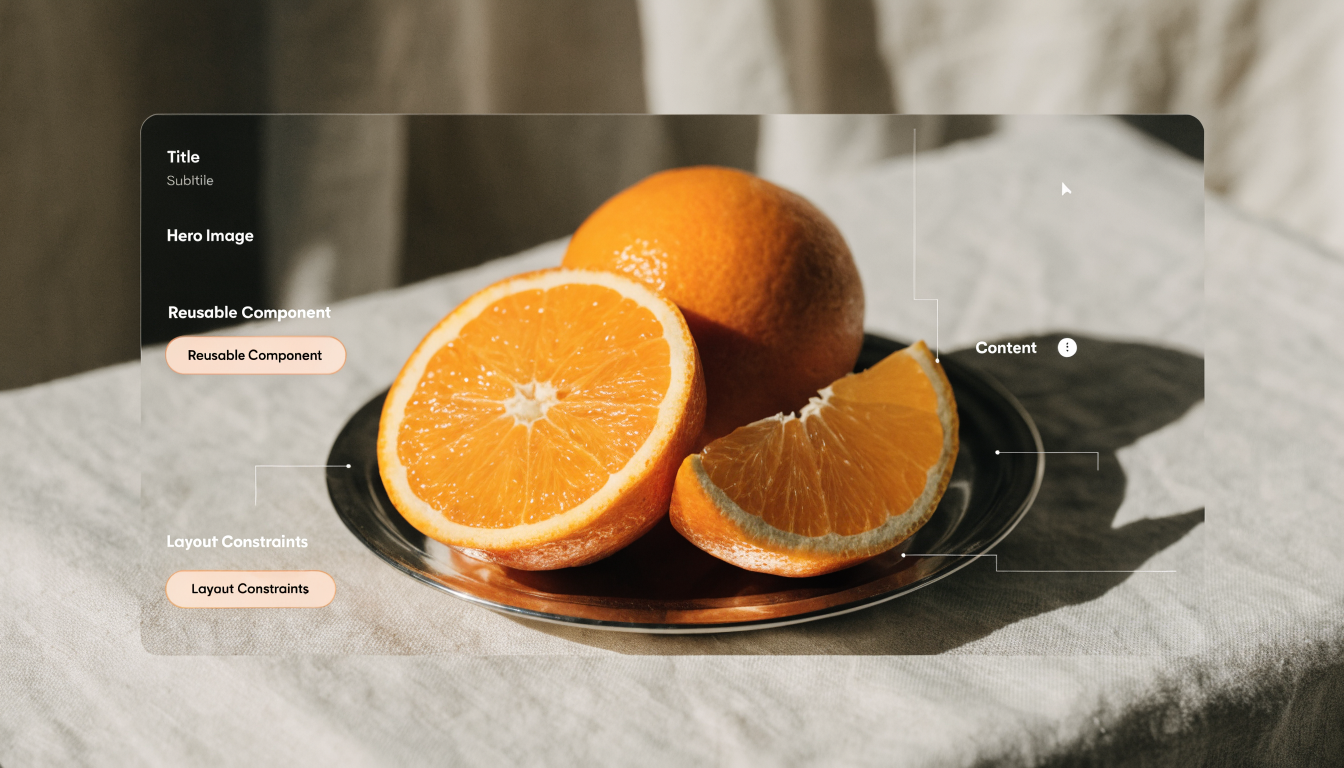
Reusable components for CMS templates
Turn repeated blocks into components: author cards, callouts, quote blocks, related posts grids, and newsletter signups. That way you improve the template once and every post improves automatically. If you’re already using a UI kit and component library like Frameblox, this is where you get compounding value—your content system and design system stay in sync instead of drifting apart.
Preventing messy layouts with constraints
Use layout constraints to protect your design from unpredictable content: set max widths on rich text, enforce consistent image ratios, and design for worst-case titles. Also test with “ugly content” on purpose—extra-long words, no image, too many tags—because real content is rarely perfect. These guardrails reduce the risk that your Framer collections produce pages that look different from what your design system intended.
This is the difference between “we launched a blog” and “we have a content engine that still looks good six months from now.”
SEO, Performance, and Publishing: What to Expect
SEO is usually the next worry after does framer have built-in cms. The good news: a Framer CMS site can be perfectly SEO-friendly for most marketing and blog needs, as long as you handle the fundamentals consistently. The main goal is to make every CMS entry produce a clean, indexable page with fast load times and clear metadata.
Metadata, slugs, and indexation basics
Make sure every entry has a unique, readable slug (avoid random numbers unless you truly need them). Use consistent title formatting and write meta descriptions that match search intent, not internal jargon. If you’re publishing many posts, create a simple internal checklist: slug set, title checked, OG image present, and page visible to indexing where appropriate.
Image handling and page speed
Large images are one of the easiest ways to slow down a CMS-driven blog. Keep cover images optimized and consistent in dimensions, and avoid uploading multi-megabyte assets when a compressed version will look identical on the page. I usually recommend picking 1–2 standard image sizes for your CMS templates so you don’t end up with random crops that hurt both design and performance.
Publishing cadence and content updates
Framer CMS is friendly to steady publishing: add entries, refresh lists, and update content without rebuilding templates. For SaaS, content updates matter just as much as new posts—refresh older tutorials, update feature screenshots, and keep timestamps accurate. A monthly “content maintenance” slot can do more for long-term SEO than publishing 10 posts and never touching them again.
If your plan is to rank consistently, treat the CMS as an operational tool: predictable fields, consistent templates, and a publishing rhythm you can actually maintain.
What People Often Wonder About Framer’s CMS
After you answer does framer have built-in cms, the next questions are usually about safety, organization, and fit. These are the things I hear most often from busy teams who want content freedom without design chaos. (And if you’re building fast, those worries are completely valid.)
Can clients edit content without breaking design?
Clients can edit CMS entries without touching layout layers, which reduces the risk of accidental design damage. The key is to design templates with constraints so content changes stay within a safe visual system. If you do that, clients get freedom where it matters (text, images, dates) without the ability to nuke spacing and typography.
Can Framer CMS handle categories and tags?
Yes, you can handle categories and tags using fields in your Collections, and you can filter lists based on them. It works well for basic taxonomies like “Design,” “Product,” “Updates,” or “Tutorials.” Where you’ll feel Framer CMS limitations is if you need very complex taxonomies with multi-level hierarchies and heavy cross-linking rules.
Is Framer CMS good for ecommerce content?
For ecommerce-style content like product landing pages, collections of features, or help articles that support a product, Framer CMS can work nicely. For full ecommerce catalogs, inventory, checkout, and transactional workflows, you typically need an ecommerce platform or a dedicated integration. In other words, Framer CMS can support the content around selling, but it’s not trying to replace an ecommerce backend.
If you’re aiming for a SaaS site with strong content marketing and sharp design, Framer CMS is often a comfortable fit—especially when you pair it with a component system to keep everything consistent.
Your Next Move: Pick the Right CMS Setup and Ship
At this point, you’re not just asking does framer have built-in cms—you’re deciding what to build on. I’d rather you pick a setup you can maintain than chase the “perfect” CMS and never publish. Here’s how I’d think about the decision if I were building a SaaS marketing site (or helping a team shipping something like Frameblox).
Choose Framer CMS if you need speed
Pick Framer CMS when you want a clean site, a blog, and a few structured content areas without building a whole system. It’s especially strong when design quality matters and you want templates that look custom. If you’re already using a design system and ready-made building blocks, the built-in workflow reduces friction and helps you ship faster.
Choose Webflow/headless if you need scale
Choose Webflow or headless when your content modeling is complex, your team needs deeper editorial workflows, or you’re publishing at a scale where governance matters. This is also where Framer vs Webflow CMS comparisons often land: Webflow tends to feel stronger for heavier CMS operations, while headless wins when content must power multiple channels and products.
A quick decision checklist to finalize today
If you want a simple way to decide, here’s a checklist I’ve used with teams:
- Go with Framer CMS if your content types are simple (posts, pages, case studies) and you want to launch in days.
- Go with Webflow CMS if you need richer CMS controls, deeper relationships, or a more traditional content editor flow.
- Go headless if content structure is complex, multi-channel, or requires strict governance and integrations.
- Whichever you choose, start with one content type and ship it before expanding your schema.
If you’re building in Framer and want your CMS templates to look polished immediately, using a robust component library can save a surprising number of hours. Frameblox is built exactly for that kind of “move fast, stay consistent” workflow—so you can spend less time rebuilding UI patterns and more time publishing content people actually want to read.
Quick recap: does framer have built-in cms is a yes—and for many SaaS marketing sites, it’s “enough CMS” to launch, grow, and iterate without dragging your team into tooling complexity.
This article was created using Blogie.