
Framer Notification System: User Questions Answered
 Solt Wagner
Why Framer Notifications Feel Harder Than They Should
If you’ve been searching for framer notification system user questions, you’re probably feeling the same friction I see in a lot of Framer builds: notifications sound simple, but they get messy fast. You add a toast, then you need stacking. Then you need different styles for success vs error. Then someone asks, “Can we show this only once?” and suddenly you’re building a mini product inside your site.
What people expect from “notifications” in Framer
Most people expect notifications in Framer to behave like a mature web app: consistent placement, clean animations, and “smart” behavior like auto-dismiss, pause-on-hover, and accessible announcements. They also expect triggers to be easy—click a button, show a toast—without having to stitch together half a prototype’s worth of states.
In practice, a lot of framer notification system user questions come from trying to ship real SaaS-like UX in a tool that’s flexible, but not prescriptive. That flexibility is awesome—until your team needs a repeatable pattern across dozens of pages.
Common misconceptions: toasts vs banners vs modals
The biggest misconception I run into is treating every message like a toast. Toasts are great for lightweight feedback (“Saved”), but they’re not ideal for “you must do something” moments. Banners are better for persistent states (billing issues, maintenance), and modals are for high-stakes interruptions (confirm delete, critical security actions).
When you use the wrong pattern, you’ll get more framer notification system user questions from users and teammates because the UI feels inconsistent or easy to miss.
What you can (and can’t) do natively today
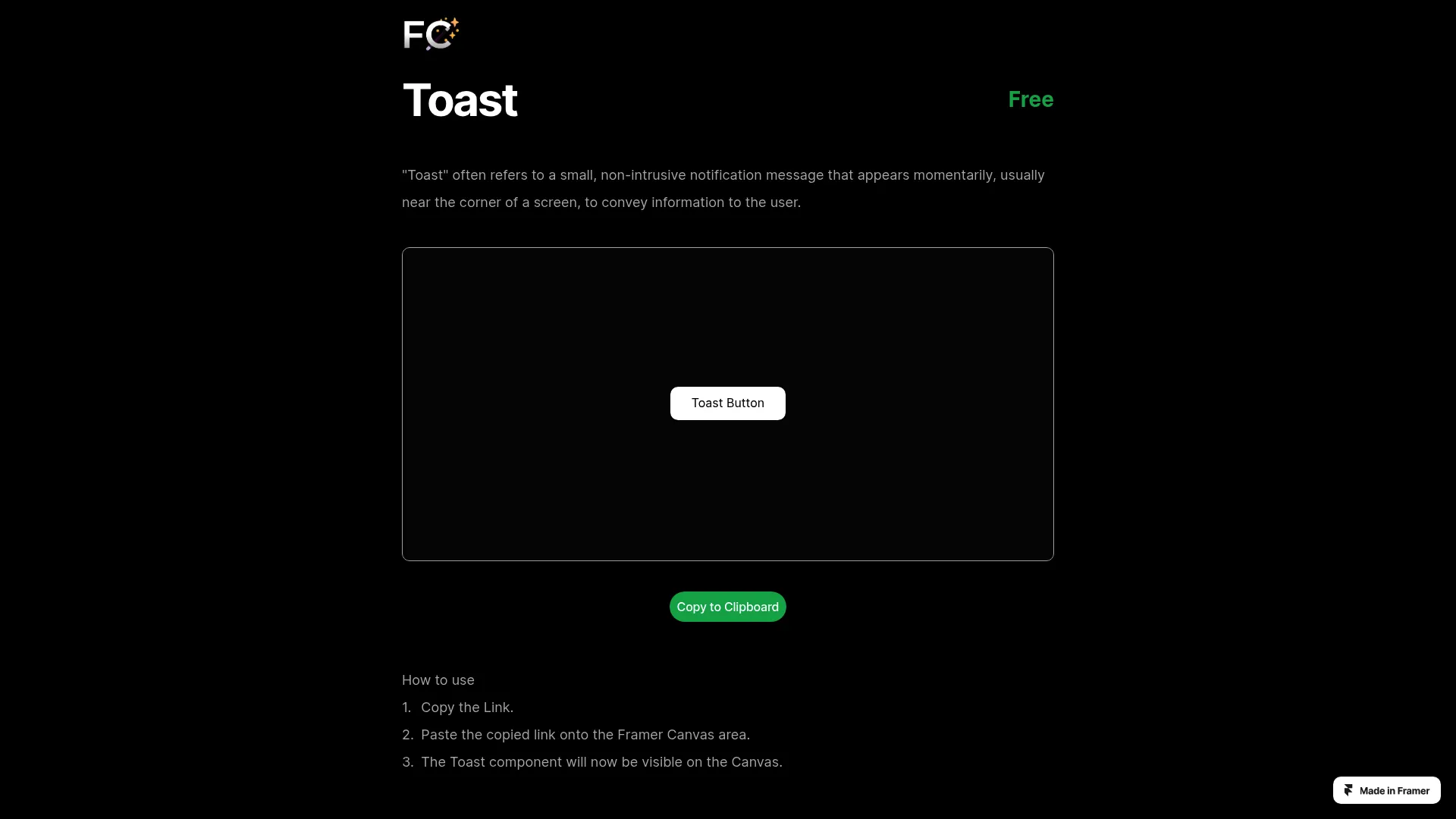
Framer gives you strong layout, interaction, and component tooling, but “notifications” aren’t a single native system you toggle on. You’ll usually use components (often from Marketplace) plus interactions, variants, and sometimes a bit of code for more app-like behavior. A good starting point is exploring existing components like Toast Notifications: Free Utilities Component by, then adapting it to your design system.
And if you’re building a SaaS-style marketing site with app-like UI (which is exactly the vibe many folks create using frameblox.com), the key is consistency: one notification language, one set of rules, reused everywhere.
Start Here: The Notification Types That Actually Work in Framer
When people ask framer notification system user questions, they’re often looking for “the right default.” So here’s mine: pick a small set of notification types you can maintain, then make them feel consistent across pages. If you’re already using a UI kit like Frameblox, this is much easier because you can align typography, spacing, and color tokens from the start.
Toast notifications for lightweight feedback
Toasts are best when the user already understands what happened and just needs confirmation—copy, save, added to cart, settings updated. They should be brief, visually calm, and placed consistently so users learn where to look. If you want a concrete example component to study, Toast - My Framer Site is a handy reference for how a toast can be structured and themed.
I’ve found that teams get fewer framer notification system user questions when they standardize toast rules early: one location, one max stack, and a predictable timer. It’s not glamorous, but it prevents a “every page does its own thing” situation.
Banners for persistent messages
Banners are the “sticky note” of your UI: they remain visible until resolved or dismissed, and they’re better for system-wide context. Think login session issues, subscription problems, important announcements, or “You’re in preview mode.” In Framer, banners are often just well-designed sections with conditional visibility and a consistent component wrapper.
For SaaS-style sites, banners can live at the top of the layout shell and reuse the same spacing rules you apply to headers and nav. That keeps your pages from shifting awkwardly when the banner appears.
Inline validation for forms and inputs
Inline validation is the unsung hero of reducing support tickets. Instead of throwing an error toast after submit, you put the message where the user can fix it—next to the field. You can still use a toast for “Submission failed,” but the details should sit inline: “Password must be at least 12 characters.”
This is one of those areas where framer notification system user questions often turn into broader UX questions, because the best “notification” is sometimes not a notification at all.
Building a Toast System That Doesn’t Break Under Real Use
Plenty of toast setups look fine in a demo and fall apart the moment real users click quickly, submit twice, or hit edge cases. If you’re getting framer notification system user questions from your team, it’s usually because the system doesn’t have clear rules for states, timing, and stacking.
Designing the base toast component (variants + states)
Start with one base toast component that has variants for success, error, warning, and info. Each variant should change more than color—include an icon, subtle border/background differences, and consistent spacing so the layout doesn’t jump. In my experience, if variants don’t share a solid grid, you’ll get “why does this one look taller?” feedback forever.
If you’re building in a design-system mindset (which is what Frameblox is built for), treat the toast like any other component: define tokens, define type scale, and lock in padding. That’s how you keep toast design from drifting across pages.
Auto-dismiss timers and pause-on-hover behavior
A common rule of thumb is 4–6 seconds for informational toasts and longer for errors—unless the error needs action, in which case it shouldn’t vanish too quickly. Pause-on-hover is a small detail that feels “premium” because it respects the user’s reading pace. In Framer, you can approximate this with hover interactions and state toggles, or use a code-backed component when you need precise timing.
This is also where framer notification system user questions show up: people want a timer, but they also want control. Make the close button obvious and consistent, every time.
Stacking rules: max count, spacing, and order
Stacking is where chaos creeps in. Decide a max count (I like 3) and what happens when you exceed it: drop the oldest, or collapse into “+2 more.” Also choose order: newest on top is usually easiest to parse because the latest action is closest to the user’s attention.
If you want a structured approach, this resource on Sonner Toast Component in Framer is worth reviewing, even if you don’t copy it directly. It’s a good mental model for the kinds of behavior that stop framer notification system user questions from turning into last-minute launch blockers.
Triggers, Events, and Timing: When Should a Notification Fire?
Most framer notification system user questions aren’t about styling—they’re about when a notification should appear. A toast that fires at the wrong time feels buggy, even if the design is perfect. The goal is to make notifications feel like a calm assistant, not a needy pop-up.
User actions: save, submit, copy, delete
User-action notifications should map to clear moments: after a successful save, after form submission completes, after a copy action succeeds, and after a delete is confirmed. The key is sequencing—don’t show “Saved” on click if the save can fail; show it when the system is actually done. If you can’t confirm completion, use “Saving…” followed by “Saved” to avoid misleading feedback.
I’ve found that teams reduce framer notification system user questions by writing down a simple rule: “No success toast until success is real.” It sounds obvious, but it’s easy to violate during a sprint.
System events: errors, offline, session timeout
System events should be higher signal and less frequent. Offline states, session timeouts, and critical errors deserve either a banner or a persistent toast with an action (“Reconnect,” “Log in again”). If the user can’t fix it immediately, don’t spam them with repeating messages—show one clear status indicator.
For SaaS UI patterns, I like separating “status” from “events.” Offline is a status (banner or chip), while “Upload failed” is an event (toast).
Debouncing and preventing notification spam
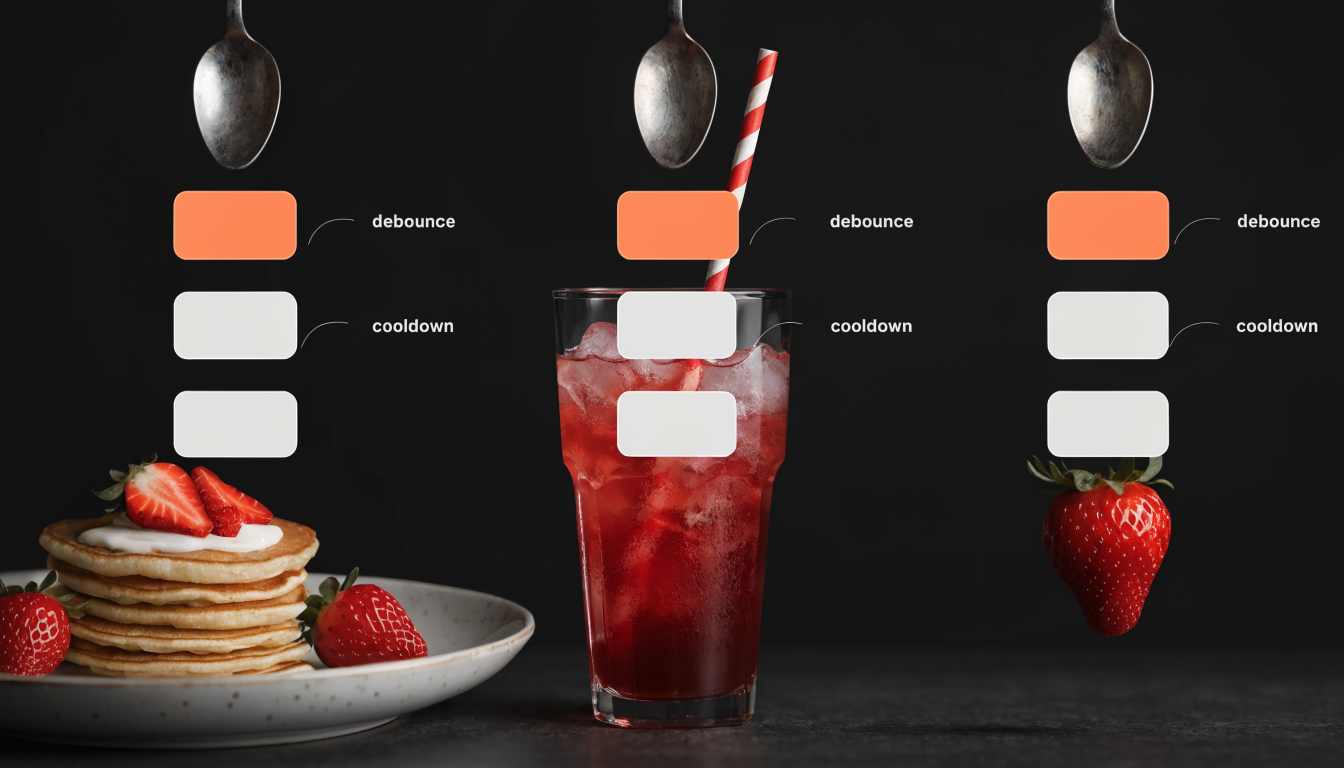
Spam happens when multiple triggers fire at once: double-clicks, repeated validations, or a component re-rendering. Add a cooldown window for identical messages (“Copied” shouldn’t fire 6 times in 2 seconds), and consider collapsing duplicates into one toast with a count.
This is one of the fastest ways to improve perceived quality, and it directly answers a lot of framer notification system user questions about “why does it keep popping up?”
Copy That Reduces Support Tickets: What to Say (and What Not to)

Notification copy is where design meets support. If you’re building a Framer site that sells a product (like a UI kit) or explains complex value, the wrong message creates confusion and extra emails. Clear copy is also one of the simplest ways to reduce framer notification system user questions from your own users.
Writing clear success, error, and warning messages
Success messages should confirm the outcome and, when helpful, name the object: “Settings saved” is better than “Success.” Error messages should say what happened and what the user can do next, without blaming them. Warnings should be specific about risk: “Unsaved changes will be lost” beats “Are you sure?” when the user needs context.
I try to keep the structure consistent: Outcome + next step. That tiny template prevents vague text that sends users hunting for meaning.
Action labels that drive the next step
If the notification includes a button, label it with the action—“Undo,” “Retry,” “View file,” “Open settings”—not “OK.” The whole point is to shorten the user’s path to recovery or confirmation. Also, make sure the action is safe: “Undo” should actually undo, not open a page where undo might exist.
This is especially relevant for marketing sites with interactive components, like comparing plans or copying code snippets from a component library page.
Localization and length constraints
Short copy is great until you translate it. Some languages expand by 20–35%, so give your toast layout room to breathe and avoid hard truncation. If you’re not localizing yet, still write with clarity and minimal jargon—future-you (or your customers) will thank you.
These details seem small, but they’re exactly the kind of things that generate framer notification system user questions after launch.
Accessibility Checks Most Notification Systems Fail
Accessibility is one of those topics people care about, but notification systems often miss the basics. And honestly, it’s not always because teams don’t care—sometimes it’s because toasts feel “visual” by nature. If you want fewer framer notification system user questions and fewer user complaints, bake accessibility in early.
Color contrast and non-color cues
Don’t rely on color alone to communicate status. A red toast needs an error icon and clear wording (“Payment failed”), not just a red background. Also check contrast: text against the toast background should meet WCAG contrast guidance, especially for smaller font sizes common in toasts.
In my experience, a subtle left border plus an icon is the simplest pattern that remains readable across themes. It’s also easier to standardize inside a design system like Frameblox.
Focus management and keyboard dismissal
If a toast is purely informational, it usually shouldn’t steal focus. But if it contains an action (“Undo”), keyboard users need a reliable way to reach it—often via a focusable region or a shortcut pattern. At minimum, ensure the close button is reachable via Tab order and can be activated via Enter/Space.
Also consider Escape to dismiss for consistency with other overlays, but don’t hide important errors too easily. This balance is a frequent source of framer notification system user questions in real projects.
ARIA live regions and screen reader timing
For real in-app notification UX, screen readers need to be notified using ARIA live regions (often polite for info and assertive for urgent errors). The message should be short and meaningful, because screen reader users may be in the middle of another task. Avoid rapid-fire announcements by debouncing repeated messages.
If you’re implementing with code components, it’s worth explicitly testing with a screen reader once, even if your site is “just marketing.” The moment you add interactive flows, accessibility becomes part of perceived quality.
Where to Place Notifications So Users Actually Notice
Placement is surprisingly emotional. Put a toast in the wrong spot and users feel like the interface is whispering when it should speak up—or shouting when it should be quiet. A lot of framer notification system user questions boil down to “Where should this live so people don’t miss it?”
Top-right vs bottom: choosing by context
Top-right is common for desktop web apps because it’s away from primary content and easy to scan. Bottom placement can be better when the user’s attention is already near the bottom, like during form completion or mobile flows. The real rule is consistency: pick one placement per product area, not per page.
I tend to use top-right for global feedback (account, settings) and near-action placement for form errors or confirmations. That division keeps notifications from feeling random.
Mobile-safe placement and thumb zones
On mobile, bottom toasts can sit in the thumb zone, but they can also collide with browser UI, sticky CTAs, or cookie banners. Top placement avoids the thumb zone, but it’s easier to miss if users are focused on inputs. The safest move is to test on a real phone and ensure nothing critical is obscured.
If you’re using a responsive system of sections and components (like what you’ll find in Components), treat toast placement as a layout decision, not an afterthought.
Avoiding overlap with nav, cookie banners, and chat widgets
Overlaps are the silent killer of polished UX. If your toast appears behind a sticky nav, or on top of a cookie banner, users won’t trust it. Reserve a “notification safe area” in your layout—an offset that accounts for sticky UI like chat widgets.
This is also why teams end up with framer notification system user questions late in QA: everything looks fine until all the real-world layers show up together.
Handling the Tricky Cases: Errors, Retries, and Offline States
The difference between a “nice toast” and a real Framer notifications system shows up in the tricky cases. Async actions, flaky connections, and destructive events are where users decide whether your product feels trustworthy. It’s also where the most common framer notification system user questions come from, because edge cases are hard to simulate until you’re in them.
Progress + completion messaging for async actions
For async actions (uploads, API saves, long calculations), you need progress signaling that doesn’t lie. A toast can show “Uploading…” with a spinner, then update to “Upload complete” when done. If you can’t provide real progress, be honest and keep the message minimal—fake progress bars often create more frustration than they solve.
In Framer, I like using a toast state that can update its variant and text, rather than spawning a second toast. That reduces clutter and answers a big chunk of framer notification system user questions about “why do I see two messages for one action?”
Retry patterns and “undo” for destructive actions
Retry is best when the system knows the user can succeed by trying again: “Retry” for network errors, “Try again” for temporary failures. Pair retry with a short explanation (“Network error”) and don’t hide details behind vague language. For destructive actions, “Undo” is gold—especially when delete is reversible for a few seconds.
Be careful: “Undo” must be reliable. If you can’t actually undo, use “Restore” and be explicit about where it happens (e.g., “Moved to trash”). These choices reduce anxious clicks and the follow-up framer notification system user questions like “Did I lose it forever?”
Offline indicators and reconnect messaging
Offline is better handled as a persistent status (banner/chip) than repeated error toasts. Show “You’re offline” once, then switch to “Back online” when the connection returns. If actions queue while offline, say that clearly: “We’ll send this when you’re back online.”
This is also where a design system helps: consistent colors, icons, and spacing make status indicators feel intentional instead of improvised.
Making It Feel Polished: Motion, Easing, and Micro-Interactions
Polish is not about fancy animation—it’s about making feedback feel immediate and predictable. When someone asks framer notification system user questions like “Why does this feel janky?”, the answer is often motion timing, easing, and a few missing micro-interactions. The nice part: these are quick wins once your structure is solid.
Entry/exit animation principles that feel fast
Toasts should enter quickly (around 150–250ms) and exit slightly faster, so they don’t linger in motion. Use easing that feels responsive—ease-out for entering (fast start, gentle settle) and ease-in for leaving. Keep movement distance small (8–16px) to avoid pulling attention away from the user’s task.
I also prefer subtle opacity + translate rather than scale; scale can feel “bouncy” unless you’re intentionally going for playful branding.
Reducing motion without losing clarity
Some users prefer reduced motion, and some contexts (like dense admin UI) simply feel better with minimal animation. Offer a motion-reduced variant: fade in/out with no slide, or a shorter transition. The key is ensuring the toast still feels “new” without needing movement.
This matters for in-app notification UX because motion is only helpful if it clarifies change. If it becomes decoration, it can distract or even irritate.
Sound and haptics: when to avoid them
Web notifications rarely need sound, and unexpected audio can be a trust-breaker—especially on a marketing site. Haptics are generally not applicable on the web, and forcing them via mobile wrappers is a product decision, not a UI flourish. If you do use sound (rare), make it opt-in and reserved for genuinely urgent events.
Most teams I’ve worked with get better results by improving clarity and timing rather than adding extra sensory cues.
Troubleshooting: The Usual Reasons Your Framer Notifications Misbehave
This section is for the “why is it doing that?” moments. If you’re implementing a Framer toast component and the behavior is inconsistent across pages, you’re not alone. A lot of framer notification system user questions are actually troubleshooting questions in disguise.
Layering and z-index issues with overlays
The most common bug: the toast shows up behind a modal, behind a sticky header, or behind a cookie banner. In Framer, stacking context can get complicated when sections, overlays, and fixed elements interact. The fix is usually to place notifications in a top-level overlay layer and standardize z-index rules across your layout.
As a habit, I like to create a “UI chrome” group: nav, modals, banners, toasts—then define their order once. That prevents last-minute hacks like “just set it to 99999.”
State conflicts: multiple triggers firing at once
If one button click triggers two interactions (or a component updates twice), you might see duplicate toasts or the wrong variant. Audit your interactions: are you firing on Tap and also on MouseDown? Are you triggering on variant change and button click? Consolidate triggers so one action creates one notification event.
For teams using a large component library (Frameblox has hundreds), this matters because small inconsistencies get multiplied across pages. Standard patterns reduce those repeating framer notification system user questions.
Performance tips when many components update
Performance issues show up as delayed toasts, stuttering animations, or missed dismiss timers. Keep your toast component lightweight: avoid heavy blur effects, huge shadows, or complex nested auto-layout that reflows the page. Also, cap how many can render at once and avoid global state updates that force an entire page re-render.
If you have a component index like All that showcases many interactive elements, it’s worth testing notifications on those heavier pages specifically.
A Simple Checklist to Ship a Reliable Notification System This Week
If your goal is to stop circling the same framer notification system user questions and actually ship, a checklist helps. I’m a big fan of “boring standards” here—clear rules, a small component set, and a few QA scenarios that catch 90% of issues. This is also where using a structured kit like Frameblox can save you hours, because your base components and styles already agree with each other.
Component inventory: types, states, and rules
Write down what you support: toast, banner, inline validation, maybe modal confirmations. For each, list states (info/success/warn/error, loading, actionable) and rules (max stack, timer length, placement). This inventory becomes the internal source of truth, so new pages don’t invent new patterns.
If you maintain a component hub (similar to Styles and your general design tokens), keep notification styles alongside typography and colors so they evolve together.
QA scenarios to test before launch
Test real scenarios, not just happy paths: double-click submit, slow network, offline mode, small mobile screens, cookie banner visible, modal open, and keyboard-only navigation. Verify that messages don’t overlap key UI and that dismiss actions work consistently. Also test readability: can you understand the message in under two seconds?
I like to keep a short QA list in the project itself, because it prevents last-minute regressions when someone tweaks spacing or adds a new banner.
Analytics and iteration: what to measure
Measure the things that indicate confusion: form drop-off after error toasts, repeated retries, and support messages mentioning “I clicked but nothing happened.” If you can, log notification events (anonymously and responsibly) to see which ones appear most. High frequency can mean a feature is failing—or just that you’re over-notifying.
And if you want a gentle next step: standardize your UI building blocks first, then notifications become much easier. That’s why tools like Code components and reusable sections matter—you’re not reinventing UI every time you answer new framer notification system user questions.
| Notification type | Best for | Common mistake | Simple rule |
|---|---|---|---|
| Toast | Quick confirmation or lightweight errors | Overused for critical issues | Auto-dismiss + clear close button |
| Banner | Persistent system status (offline, billing) | Too tall / pushes layout unpredictably | Reserve space in layout shell |
| Inline validation | Fixable input errors | Only showing errors after submit | Put the message next to the field |
| Modal | High-stakes confirmations | Used for minor info | Interrupt only when necessary |
Quick practical FAQ (for busy builders)
- How many toasts should I allow at once? Three is a solid default. More than that starts to feel like a log, not helpful feedback.
- Should error toasts auto-dismiss? Sometimes, but keep the timer longer and always provide a clear dismissal. If the user must act, consider a banner or inline message instead.
- What’s the fastest way to make notifications consistent? Create one base component with variants, document your rules, and reuse it everywhere—don’t rebuild per page.
If you want your Framer site to feel like a product (not just a page), getting notifications right is one of the quickest credibility boosts. And once you’ve got your foundations—tokens, components, spacing—locked in, answering new framer notification system user questions becomes routine instead of stressful.
This article was created using Blogie.